Kumbh Vivah Explained: The Ultimate Manglik Dosha Remedy Guide 2026
In the realm of Vedic matchmaking, Manglik Dosha (or Kuja Dosha) induces more anxiety than almost any other planetary combination. Caused by the malefic placement of Mars in the 1st, 2nd, 4th, 7th, 8th, or 12th houses, it is feared for causing severe marital discord, divorce, and in extreme cases, fatal health threats to the non-Manglik spouse.
But Vedic astrology is fundamentally a science of solutions, not a science of doom. Among all the available remedies to pacify Mars—mantras, gemstones, and fasting—none is considered as unconditionally effective and profoundly powerful as the ancient ritual of Kumbh Vivah. In this definitive 2000-word guide, we break down exactly what Kumbh Vivah is, the scientific logic behind the ritual, and the precise step-by-step procedure required for its success in 2026.
What is Kumbh Vivah?
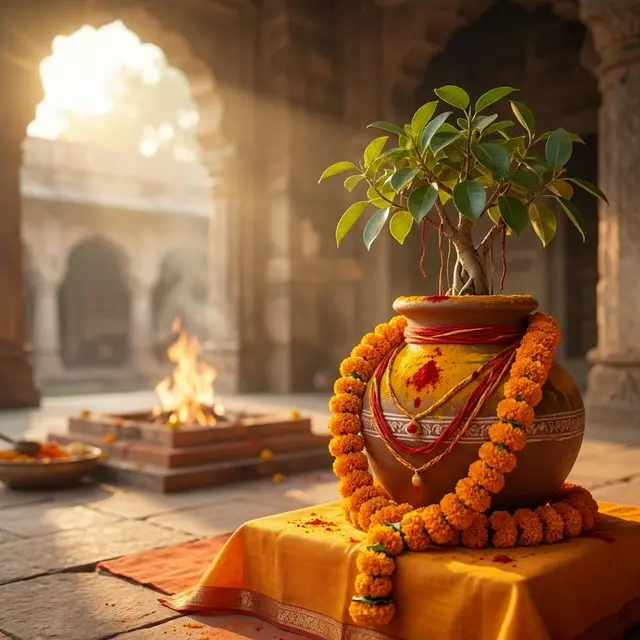
Kumbh translates to a mud pot (often filled with water), and Vivah translates to marriage. A Kumbh Vivah is a deeply symbolic, highly ritualistic wedding ceremony where a Manglik individual (typically the bride, though it applies to grooms as well) is formally "married" to a mud pot, an idol of Lord Vishnu (Shaligram), or a specific sacred tree (like Peepal, Banyan, or Banana) before marrying their actual human spouse.
The core astrological rule regarding a severe Manglik Dosha is that the aggressive, destructive energy of Mars will attack the individual's first marriage and their first spouse. By performing Kumbh Vivah, the individual's "first marriage" is completed with an inanimate earthly object or divine idol.
Once the ritual is complete, the pot is broken, or the connection to the tree is released. The "first marriage" absorbs all the lethal, destructive energy of the Manglik Dosha. When the individual subsequently marries their human partner, it is technically their second marriage, which is completely free from the curse of Mars!
The Three Types of Symbolic Vivah (Marriages)
Depending on the exact position of Mars and the regional Vedic traditions being followed, a qualified priest may prescribe one of three specific objects for the first marriage:
1. Kumbh Vivah (The Mud Pot)
The most common form. A fresh, unused earthen pot is filled with pure water, sacred threads, and floral offerings. After the complete wedding rituals are performed with the pot acting as the groom, the pot is silently taken to a river or isolated place and broken, symbolizing the end of the malefic marital karma.
2. Vriksha Vivah (The Sacred Tree)
The Manglik individual is married to a Peepal (Sacred Fig), Banyan, or Banana tree. Trees rooted deep in the earth have an immense capacity to absorb negative cosmic frequencies. The destructive Mars energy is permanently grounded into the earth through the tree without harming it.
3. Shaligram Vivah (Lord Vishnu)
Considered the purest and most protective method. The bride is married to a Shaligram shila (a fossilized shell acting as an aniconic representation of Lord Vishnu). Because Lord Vishnu is the preserver of the universe, no planetary dosha can harm him. He easily absorbs the Manglik fire, purifying the bride's karma safely.
The Step-by-Step Procedure of Kumbh Vivah
Many people falsely believe that Kumbh Vivah is a simple 10-minute prayer. In reality, to be astrologically effective, it must be performed with the exact same seriousness, rituals, and mantras as a real wedding. The universe must genuinely recognize the event as a marriage contract.
Setting the Muhurat (Auspicious Time)
An experienced astrologer calculates a highly auspicious date and time, completely avoiding periods of Rahu Kaal. This is often done on Tuesdays (the day of Mars) or Thursdays.
Sankalpa (The Vow)
The priest guides the Manglik individual to take a solemn vow (Sankalpa). The individual declares to the cosmos, stating their name, gotra, and geographic location, that they are entering this union to pacify their Kuja Dosha.
The Bride's Preparation
The bride (or groom) dresses in full traditional wedding attire. Often, parents perform Kanyadaan (giving away of the bride) to the pot or the Shaligram, just as they would to a human groom.
Mangal Phere (The Seven Steps)
The most critical part. The individual accompanied by the priest, holding the pot (or circling the tree), completes the traditional 7 circumambulations around the sacred fire (Agni) while Vedic marriage mantras are chanted.
The Submersion / Breaking (Visarjan)
If a mud pot was used, the bride is made to secretly break the pot, or submerse it in a flowing river without looking back. This represents the "death" of the first spouse, officially exhausting the lethal quota of the Manglik Dosha karma.
Can Males Perform Kumbh Vivah?
A common misconception is that Kumbh Vivah is only for Manglik girls. This is entirely false. If a boy has a high-degree, lethal Mangal Dosha (for instance, Mars sitting in the 7th house in Scorpio, aspected by Saturn), his chart poses a severe physical threat to his future wife.
In cases of a severe Male Manglik Dosha, the boy is made to marry an earthen pot or an idol of the Goddess (or the Tulsi plant). This is often referred to as Ark Vivah. The principles of karma absorption remain identically effective regardless of gender.
Is Kumbh Vivah Always Necessary?
Absolutely not. Millions of people undergo extreme panic upon being told they are "Manglik," failing to realize that Vedic astrology is full of natural cancellation rules. Nearly 60% of all Manglik Doshas are automatically cancelled within the chart itself!
For example:
- If Mars is placed in its own sign (Aries or Scorpio), the dosha is nullified.
- If strong Jupiter perfectly aspects the afflicted Mars, the dosha vanishes.
- If a Manglik marries another Manglik, their planetary energies perfectly balance and completely cancel each other out. No Kumbh Vivah is required.
Kumbh Vivah should only be prescribed by a highly experienced astrologer if a High-Severity, Uncancelled Manglik Dosha exists, and the Manglik individual deeply wishes to marry a non-Manglik individual.
Conclusion: Securing The Perfect Marriage
Kumbh Vivah is a testament to the profound psychological and spiritual science of ancient India. By tricking the cosmic karmic cycle, it allows individuals burdened with heavy astrological alignments to find lasting love, peace, and longevity in their human marriages.
Before taking the drastic step of organizing a Kumbh Vivah, you must thoroughly evaluate the exact severity of your Mars placement. Use our Advanced Online Kundali Matching Tool. It doesn't just calculate points; it acts as an expert astrologer, scanning your chart for all natural Manglik cancellation rules and generating a deeply comprehensive verdict.