Panchak Shanti Puja: Complete Ritual Guide, Mantras, Cost & Benefits
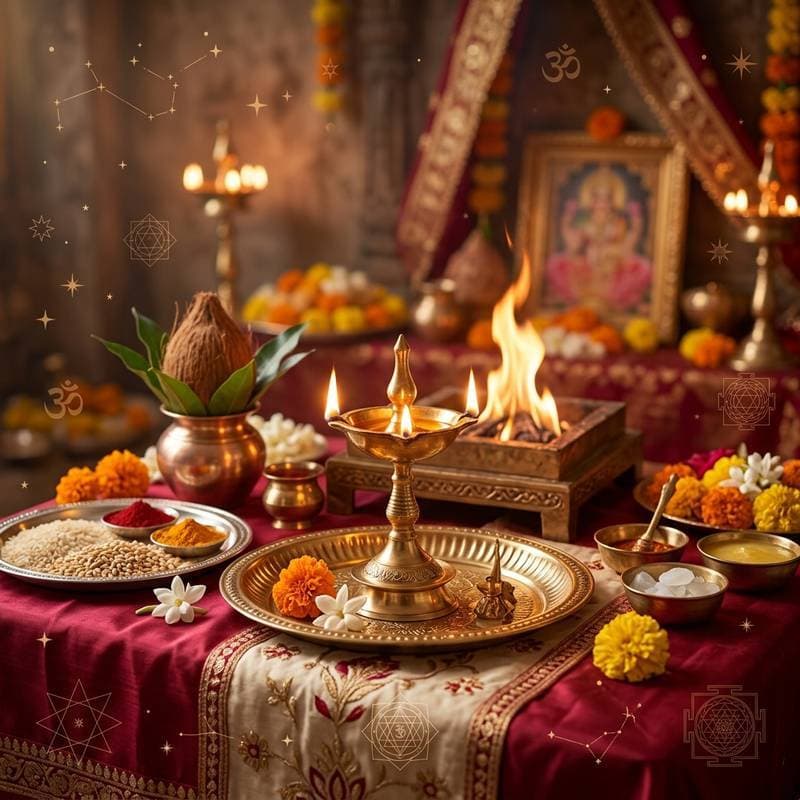
When an important event falls during the five inauspicious days of Panchak, or when you must undertake restricted activities during this period, Panchak Shanti Puja becomes essential. This ancient Vedic ritual neutralizes the turbulent energies of Dhanishta, Shatabhisha, Purva Bhadrapada, Uttara Bhadrapada, and Revati Nakshatras, creating a protective shield for your endeavors.
In this comprehensive guide, we reveal the complete procedure, mantras, material requirements, and spiritual science behind Panchak Shanti Puja. Whether you are a devotee performing this at home or seeking priestly assistance, this 2,000+ word manual will be your definitive resource.
When is Panchak Shanti Puja Required?
- ✓ Birth during Panchak (for the newborn's wellbeing)
- ✓ Death occurring in Panchak (essential for proper soul transition)
- ✓ Marriage ceremonies during Panchak
- ✓ House construction starting in Panchak
- ✓ Major business launches during restricted periods
- ✓ Moving into a new home during Panchak
- ✓ Purchasing vehicles or property in Mrityu Panchak
The Spiritual Science of Panchak Shanti
Before diving into the ritual procedure, understanding the why behind Panchak Shanti Puja deepens its effectiveness. The five Nakshatras that constitute Panchak represent the final stages of the soul's journey through the zodiac:
The Five Nakshatras and Their Energies
1. Dhanishta (The Drum of Time)
Represents the rhythm of cosmic cycles. When disturbed during Panchak, it creates timing-related obstacles.
2. Shatabhisha (The Hundred Healers)
Governs healing and hidden knowledge. In Panchak, its reverse energy can manifest as hidden problems.
3. Purva Bhadrapada (The Front of the Funeral Cot)
Associated with transformation and fire. Its intense energy requires careful channeling.
4. Uttara Bhadrapada (The Back of the Funeral Cot)
Governs final liberation and ancestral connection. During Panchak, it can disturb ancestral peace.
5. Revati (The Wealthy)
The final Nakshatra before renewal. Its completion energy can create sudden endings if not properly guided.
Panchak Shanti Puja: Complete Step-by-Step Procedure
This procedure can be performed by a qualified priest or, with proper preparation, by the head of the family. The ritual typically takes 2-3 hours and is best performed during the morning hours (Brahma Muhurta to midday).
Preparation Phase (Day Before or Early Morning)
- Fasting: The main performer (kartā) should observe a light fast or eat only sattvic food (fruits, milk, simple grains) on the day of the puja.
- Purification: Take a ritual bath before sunrise if possible. Wear fresh, clean clothes (preferably white, yellow, or light colors).
- Space Preparation: Clean the puja area thoroughly. The space should be on the ground floor or at ground level (important for earth connection).
- Altar Setup: Create a temporary or permanent altar facing East or North.
Materials Required (Samagri)
Here's the complete list of materials needed for Panchak Shanti Puja:
Essential Items
- Panchdhatu or Ashtadhatu idol (five-metal or eight-metal alloy)
- Five Kusha grass dolls (Panchak Purush)
- Ghee (clarified butter) - 500g
- Sesame seeds (til) - 250g
- Rice (akshat) - 500g
- Five types of grains (panchdanya)
- Betel nuts (supari) - 21 pieces
- Flowers - preferably white and yellow
- Incense sticks and camphor
- Durva grass
- Ganga jal (holy water)
Ritual Items
- Five small pots (kalash) made of copper or clay
- Red cloth for covering pots
- Sacred thread (kalawa/moli)
- Sandalwood paste (chandan)
- Kumkum (red vermilion)
- Turmeric powder (haldi)
- Betel leaves (paan) - 21 leaves
- Five types of dry fruits
- Honey and sugar
- Panchamrit (mixture of five nectars)
- Bhojpatra (birch bark) or plain paper for writing mantras
The Five Main Phases of the Puja
Phase 1: Ganesh Puja & Sankalp (15-20 minutes)
Begin by invoking Lord Ganesha to remove obstacles:
Ganesh Mantra:
"Om Gam Ganapataye Namah"
Chant 108 times or 11 times minimum
Sankalp (Resolution): Hold water in your right palm and state:
"I [your name], son/daughter of [father's name], am performing this Panchak Shanti Puja on [date] during [Nakshatra name] to neutralize the dosha of Panchak and seek blessings for [specific purpose - birth/death/marriage/construction, etc.]. May the five lords of Panchak be pleased and remove all obstacles."
Phase 2: Kalash Sthapana (Establishing the Sacred Pots) (20-30 minutes)
The five kalashas represent the five Nakshatras of Panchak:
- Fill each of the five pots with water mixed with Ganga jal, turmeric, and rice
- Place mango leaves (5 leaves per pot) around the rim
- Place a coconut on top of each pot, wrapped in red cloth
- Tie sacred thread around each pot
- Apply sandalwood paste and kumkum tilak on each coconut
- Arrange the five kalashas in a semi-circle or straight line representing the five Nakshatras
Phase 3: Panchak Purush Invocation (30-40 minutes)
This is the most crucial phase. The five Kusha grass dolls represent the "five bodies" of Panchak energy:
Creating the Panchak Purush
Each doll is made from Kusha grass (sacred grass used in Vedic rituals):
- Doll 1: Represents Dhanishta - wrap with yellow thread
- Doll 2: Represents Shatabhisha - wrap with white thread
- Doll 3: Represents Purva Bhadrapada - wrap with red thread
- Doll 4: Represents Uttara Bhadrapada - wrap with blue thread
- Doll 5: Represents Revati - wrap with green thread
Mantra for Panchak Purush:
"Om Dhanishthaya Namah | Om Shatabhishaya Namah | Om Purvabhadrapadayai Namah | Om Uttarabhadrapadayai Namah | Om Revatyai Namah |"
Chant this cycle 21 times, touching each doll in sequence
Phase 4: Havan (Fire Ritual) (45-60 minutes)
The fire ritual transforms the offered materials into subtle energy that satisfies the Panchak lords:
Havan Procedure
- Light the sacred fire using camphor and dry coconut
- Add ghee with each mantra chant
- The main Panchak Shanti Mantra for havan:
"Om Namo Bhagavate Vasudevaya | Panchak Devatabhyo Namah | Swaha |"
(Offer ghee into fire after each "Swaha")
Materials for Havan: The five grains (panchdanya), sesame seeds, ghee, and small pieces of the five Kusha dolls are offered into the fire.
Phase 5: Purnahuti & Visarjan (Conclusion) (20-30 minutes)
- Purnahuti: The final offering includes all remaining materials - flowers, fruits, and a special mixture called "Panchak Homa Samagri"
- Aarti: Perform aarti with camphor flame, singing the Panchak Shanti Aarti
- Prasad Distribution: Distribute blessed food to all attendees
- Visarjan: Immerse the Kusha dolls in flowing water (river, stream) or bury them under a peepal tree
- Kalash Visarjan: The water from the five kalashas should be sprinkled around the home and at the entrance
Special Variations of Panchak Shanti Puja
For Birth in Panchak (Janma Panchak Shanti)
When a child is born during Panchak, additional elements are included:
- The baby's name should be whispered into the first Kusha doll
- Extra havan offerings for the child's health and longevity
- Sweets made with honey and sesame are distributed as special prasad
- The ritual should be performed on the 5th, 12th, or 27th day after birth
For Death in Panchak (Mrityu Panchak Shanti)
This is the most critical Panchak Shanti, believed to prevent the "five deaths" phenomenon:
- Five Brahmin priests are ideal (representing the five Nakshatras)
- The Kusha dolls are made larger and more elaborate
- After visarjan, the family must donate five items to five different Brahmins
- Feeding five poor people immediately after the puja is mandatory
For Marriage in Panchak (Vivah Panchak Shanti)
Couples marrying during Panchak should:
- Perform the puja together, both touching the kalashas
- Exchange garlands made of five types of flowers
- The wedding fire (agni) itself serves as the havan, with additional mantras
- Couple should fast until the puja is complete
Cost of Panchak Shanti Puja
The cost varies based on location, priest expertise, and scale of the ritual:
| Type of Puja | Basic (₹) | Standard (₹) | Elite (₹) |
|---|---|---|---|
| Home Puja (Self) | 1,500 - 3,000 | - | - |
| With 1 Priest | 3,100 - 5,100 | 5,100 - 11,000 | 11,000 - 21,000 |
| With 5 Priests | 11,000 - 21,000 | 21,000 - 51,000 | 51,000+ |
| Temple (Ujjain/Varanasi) | 5,100 - 11,000 | 11,000 - 31,000 | 51,000 - 1,00,000 |
Note: Prices vary by city. Major pilgrimage sites like Ujjain, Varanasi, and Haridwar command premium rates due to spiritual significance.
Frequently Asked Questions
Can I perform Panchak Shanti Puja myself without a priest?
Yes, if you have basic knowledge of Vedic rituals. However, for deaths in Panchak or major life events, a qualified priest is strongly recommended. The mantras must be pronounced correctly for full effect.
What if I cannot find Kusha grass?
Kusha grass is essential for this puja. If unavailable, you may substitute with:
- Durva grass (used for Ganesha)
- Sacred basil (tulsi) stems
- Order authentic Kusha grass online from Vedic suppliers
How soon after a Panchak event should I perform the puja?
Ideally within 5 days. Maximum window is 27 days (one lunar cycle). Beyond this, the effectiveness reduces, though the puja still provides spiritual benefit.
Can the same puja cover multiple Panchak events?
No. Each event (birth, death, marriage, etc.) requires its own specific Sankalp and modifications. Combining them dilutes the focused energy needed for each situation.
Plan Around Panchak 2026
Avoid needing emergency remedies by planning ahead. Check our Complete Panchak 2026 Calendar to schedule your important events on auspicious dates.
Conclusion
Panchak Shanti Puja is not merely a ritual of fear; it is a technology of transformation. The five Nakshatras represent powerful cosmic forces that, when properly honored and channeled, can accelerate spiritual growth and remove deep-seated karmic blocks.
Whether you are performing this puja for a newborn, a departed soul, or to safeguard a major life decision, approach it with reverence, precision, and an open heart. The ancient Vedic seers designed these rituals with profound understanding of energy mechanics—trust in their wisdom, follow the procedure faithfully, and receive the blessings of cosmic harmony.